
Transmission, Adelaide Fringe
Posted 17 April 2012
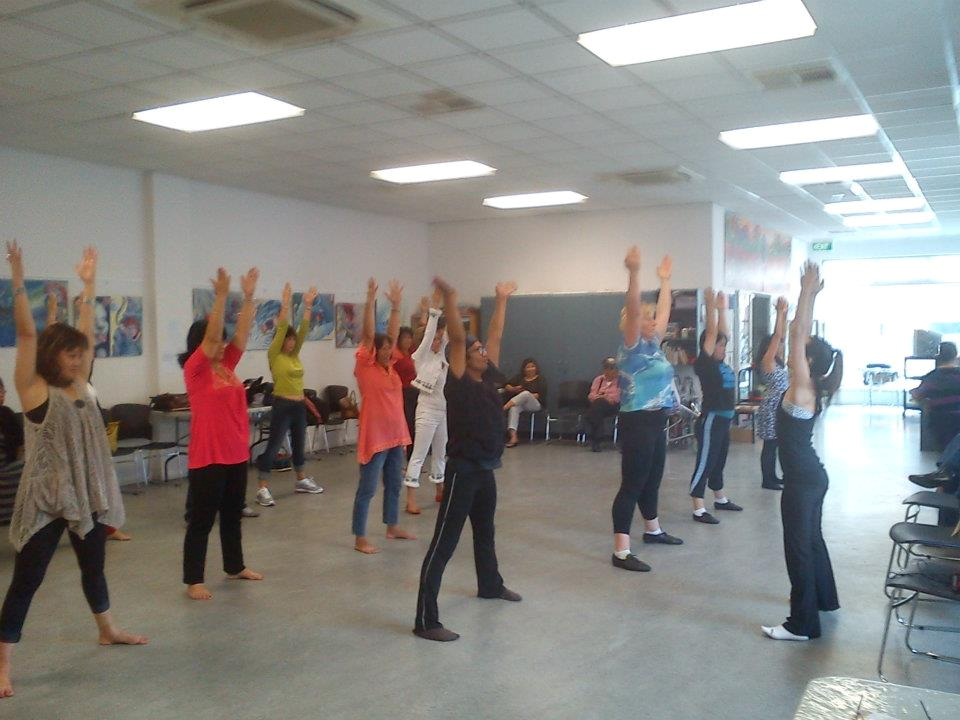
With much personal indebtedness to the generous support of sponsors, contributors, enablers and collaborators for making it an invaluable learning experience, the 2012 Adelaide Fringe with over 900 events including ‘Transmission’ presented by Anahata Community on the 15 and 17 March, brings back doting images of an exciting and vibrant arts festival.
Preparations for our two-day event didn’t come without some hurdles, like trying to devise a suitable title that could more or less give it the ability to evoke a fun sense of meaning or purpose amongst the dozens of world class offerings vying for Fringe goers’ patronage. Then came the task of putting together a program that would reflect a few aspects of things gone by for which, as projects coordinator, I thought the theme community dance would be worth exploring further, especially considering that historically many societies have placed emphasis on the significance of dance and the arts as an expression of their collective ideas, values or culture. I think American anthropologist Ruth Benedict reinforces this concept when she posits that ‘The life history of the individual is first and foremost an accommodation to the patterns and standards traditionally handed down in his community’. Underscoring this, in the Philippines for example the handing down of traditions can not only help determine ones livelihood and wellbeing, but also your vocation in life and social identity.
There are stories of communal activities becoming celebrated dances throughout the Philippines and these include the ‘Banga’, originally enacted by native women from the mountainous Cordilleras region with its use of earthen clay pots for fetching water by the river which are skillfully balanced on their heads. ‘Dugso’ is a ritual dance from the Cotabato region of Mindanao also performed by tribeswomen on various occasions such as at religious feasts, in victory after war or to show thanksgiving to the deities for a good harvest. The ‘Pangalay’ from Sulu is the most distinctively Asian of the Philippine dances and is derived from the pre-Islamic Buddhist concept of male and female celestial angels. Performed at weddings and other festivities it is characterized by its use of extended fingernails or janggay which the dancers bring to life with dexterous movements of the shoulders, arms, wrists and fingers.
In presenting these aspects to the modern economic world then, our Fringe program comprised of three activities under the banner of ‘Transmission’ beginning on the first day with a Creative Movement Workshop at the Adelaide South West Community Centre. The session was facilitated by former Ballet Philippines principal dancer and Artistic Director of Seven Contemporary Dance Company, Christine Crame standing in for Adelaide based teacher and dance filmmaker Dianne Reid who was unable to teach due to a medical emergency. Nonetheless several members of the Filipino community as well as dance students from around Adelaide enjoyed the warm-up, stretching and individual/group exercises, the latter being based on creative improvisation approaches which encouraged participants to explore the use of the body and non-verbal communication as a form of expression.
The second day began in the early afternoon with two workshops at Ausdance SA specifically for emerging artists and professional dancers, starting with a contemporary dance class again taught by Christine followed by an intensive hip hop class led by company dancer and assistant director for Seven Contemporary Dance Company, Kristoffer Legarde. Even though only minimal numbers attended, perhaps due to a few scheduling concerns, it was promising to see an intimate gathering of Filipinos together with students and teachers from different South Australian dance organisations at the Seven Repertory Preview performed by Christine and Kris later in the afternoon. The preview featured an excerpt from ‘Lust’, a playful duet and the next chapter in a series based on the seven deadly sins choreographed by Christine and Kris which combined sinuous lifts and partner work with intimate moments, dynamic choreography and emotive spoken word snippets. Adding to the dialogue, this was followed by quite a poignant solo piece performed by Christine who re-enacted her character ‘Abandonada’ from the full length dance work entitled ‘Sayaw Sabel’ (Dance Sabel) inspired by visual artist Bencab and created in 2010 by Philippine dance luminary/neo-ethnic choreographer Agnes Locsin, a prime engineer of informed, ‘culturally conscious artistic practice’ (Miranda 2010).
From here the event continued later that night until the early hours of Sunday with the third installation called Groovology at Cuckoo Bar, a downtown dance club and techno music venue. This was our culminating activity with the art of dance again being a primary focal point set within the diverse social atmosphere of the Adelaide underground dance music community. The aural soundscape was provided by resident deejay artist and international producer HMC, supported by deejays Derek Lang, Marc Lok, Lukky K, Demo and DJ Phil. We also presented a fashion-dance montage which (out of necessity I guess) I happened to conceive, direct and choreograph in between freelance assignments and trying to settle into a new academic routine. The showcase included local dance artists Ade Suharto (Indonesian choreographer and director, ‘In Lieu’ Oz Asia Festival 2011) and Aisha Jasper (Ausdance SA), as well as my re-configured stage persona Phen-ohm-ena and Seven Contemporary Dance Company, all adorned in apparel generously provided by one of my favourite fashion houses Miss Gladys Sym Choon.
In hindsight being part of the Adelaide Fringe is certainly an invaluable platform for anyone wanting to bring some unique artistic perspectives to the foreground, and for ‘Transmission’ it was essentially about the process as much as the product. From discovering the cultural relevance of dance as an art form to appraising the way we interact and contribute to its advancement, therein now lies a challenge of continually building on this repertoire, not only to uphold the rationale behind the role of community arts, but also to highlight its performative constructs, both within and across cultures, and in the context of Community Cultural Development (CCD).
Video link: http://www.youtube.com/watch?v=bLnaJ4KCL4U


La Primavera
Posted 10 October 2011
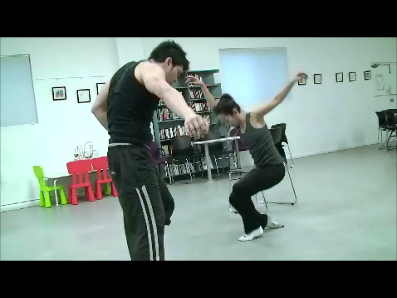
With class plan in hand Ben was prepared for the next round of creative movement workshops at Enfield Community Centre (Aug-Sept) and at Adelaide South West Community Centre (Oct) as well as a one off session with the Post Adoption Support Services’ Mentor and Adoptee Group at Relationships Australia (South Australia). Comprised of adopted young people aged between 9 and 22 years old from diverse cultural backgrounds, the PASS MAG participants took well to the jazz and hip hop combinations and choreography explored during the workshop. There was plenty of energy from everyone as well as a willingness to learn and share their ideas on the class material.
More creative movement workshops to come thanks to the support of ASWCC staff, volunteers and patrons. Ben hopes the centrally located space in Sturt St. in the city will encourage more dance enthusiasts, fitness buffs, residents and CALD communities to be involved to get some good energy going throughout October and the coming months.
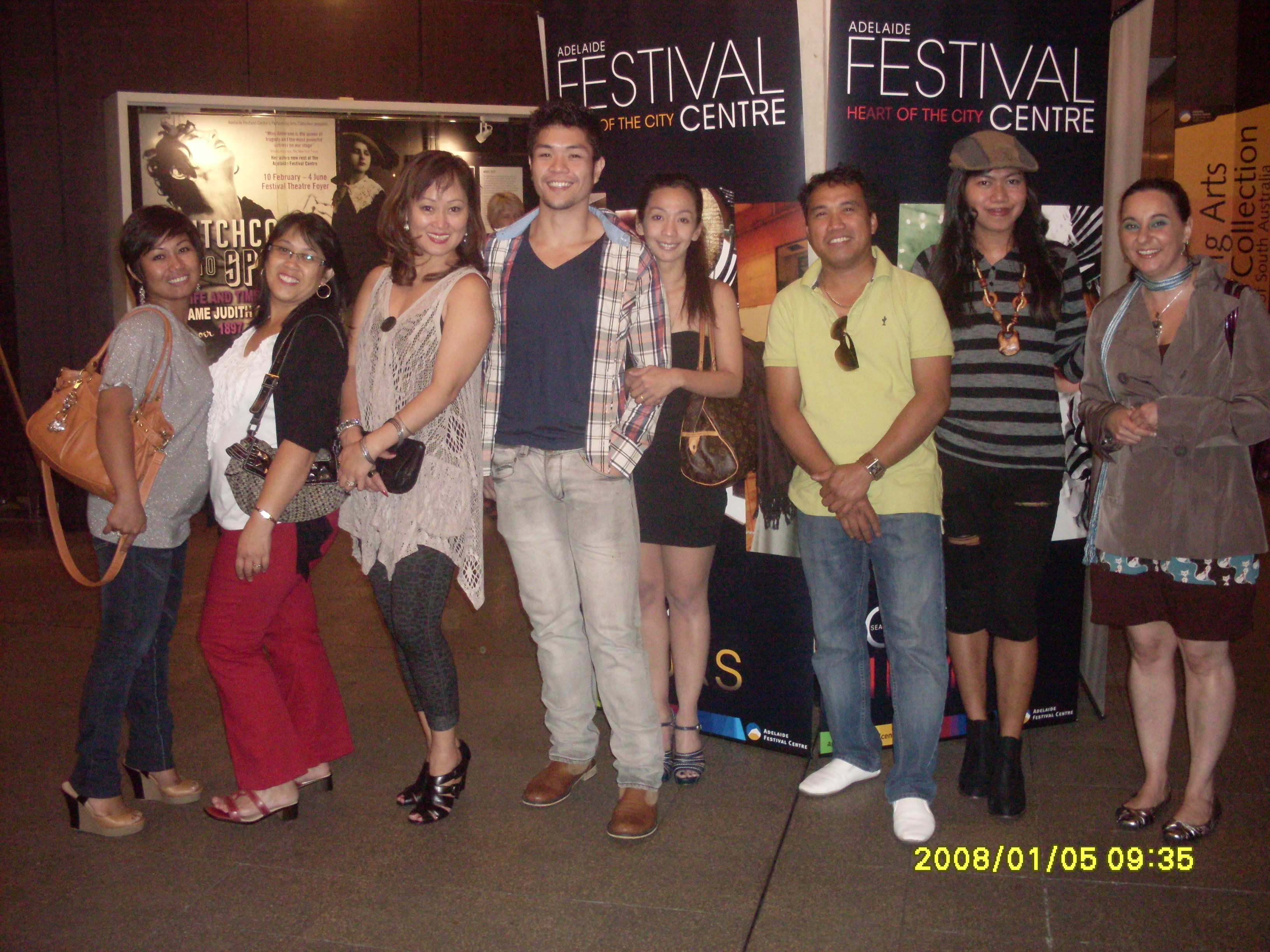
The Every Generation Festival 2011 was launched at the Adelaide Festival Centre main stage on Friday 30 September in a morning of fun and entertainment thanks to COTA and the Government of South Australia Department of Families and Communities, the many festival partners, performers and presenters. Highlights included morning tea followed later by the presentation of the Positive Ageing Awards finalists who were acknowledged for their individual achievements by the Minister for Ageing the Hon. Jennifer Rankine MP, entertainment by the Woodville High School Senior Choir and The Fourmen, the Kaurna Plains School Choir, information stalls, the Music Theatre Medley and of course the event emcee Peter Goers.
Cholly Winter was selected as a finalist for the Positive Ageing Awards Best Achiever category, surely an inspiration to all. Winners will be announced on 26 October at the awards dinner which will be held at the Adelaide Intercontinental Hotel.
Reviving her creativity and artistic passion, a long time family friend launched her fashion label on Friday 7 October to a receptive audience in the cosmopolitan setting of North Adelaide. Ju’Dori Australia is the brainchild of Doris Pearman, a Filipina who, when not travelling and visiting family and friends in the United States, Thailand and the Philippines, draws inspiration for her couture creations from an unassuming home based workroom and atelier in Adelaide, Australia. After many late nights of hand beading plus several rehearsals and bonding sessions with the models and production team, the collection finally came together on the night despite last minute changes to the choreography and the usual pre-show jitters from everyone. The Estonian Hall on Jeffcott St. was suitably set-up for the occasion with a generous catwalk plus champagne, beer, wine and nibbles which were enjoyed by all. The Ju’Dori casual, corporate, play and after five collections and offerings were a hit and special mention must be given to the models Honey, Amy, Maria, Rebecca, Voula, Tanya and Serena who really worked the runway.
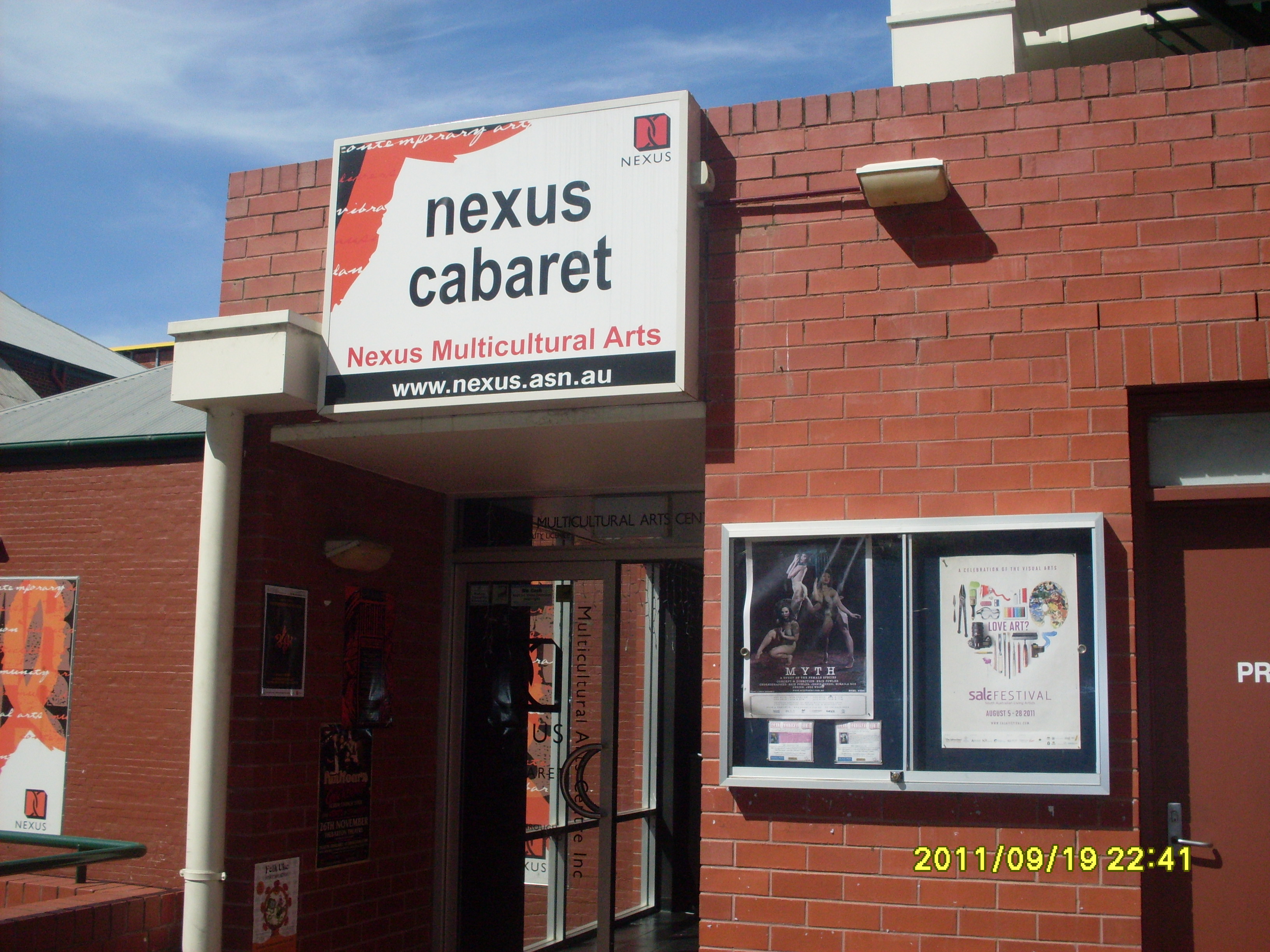 In a brave attempt to try and reconnect to our Philippines heritage in a new way, friends, family and notable individuals from the Filipino community including Vicky Davey, Aida Garcia, Florinda Shanks and Ramon Cruz came and supported the ‘24K’ film screening at Nexus Multicultural Arts on Saturday 8 October presented by Anahata Community in association with Filipino Aged Care of SA Inc. Preparations for this event began while Ben was in Manila where his cultural work included encounters not only with incredible dancers, dance teachers, academics, researchers and choreographers, but also producers, directors and community leaders in the field of filmmaking.
 He met Ana Agabin the director of 24K at Starbucks in Quezon City in early 2010 with ideas about collaborating to mount a series of independently funded screenings which would feature the film that marked her 2009 directorial debut. Who would’ve thought that around a year and a half later the film would be premiering in Adelaide at an exclusive film screening? This is the first of further inter-cultural dialogues that Anahata plans to develop utilizing the medium of film to help encourage more participation in the arts and cultural development by CALD communities, artists and audiences. Thank you to Monique Uribe, Marissa and Cholly for being there to help run the event and for the wonderful food. Many thanks also to Darra, Conor and the Nexus staff who made it seem like a breeze.
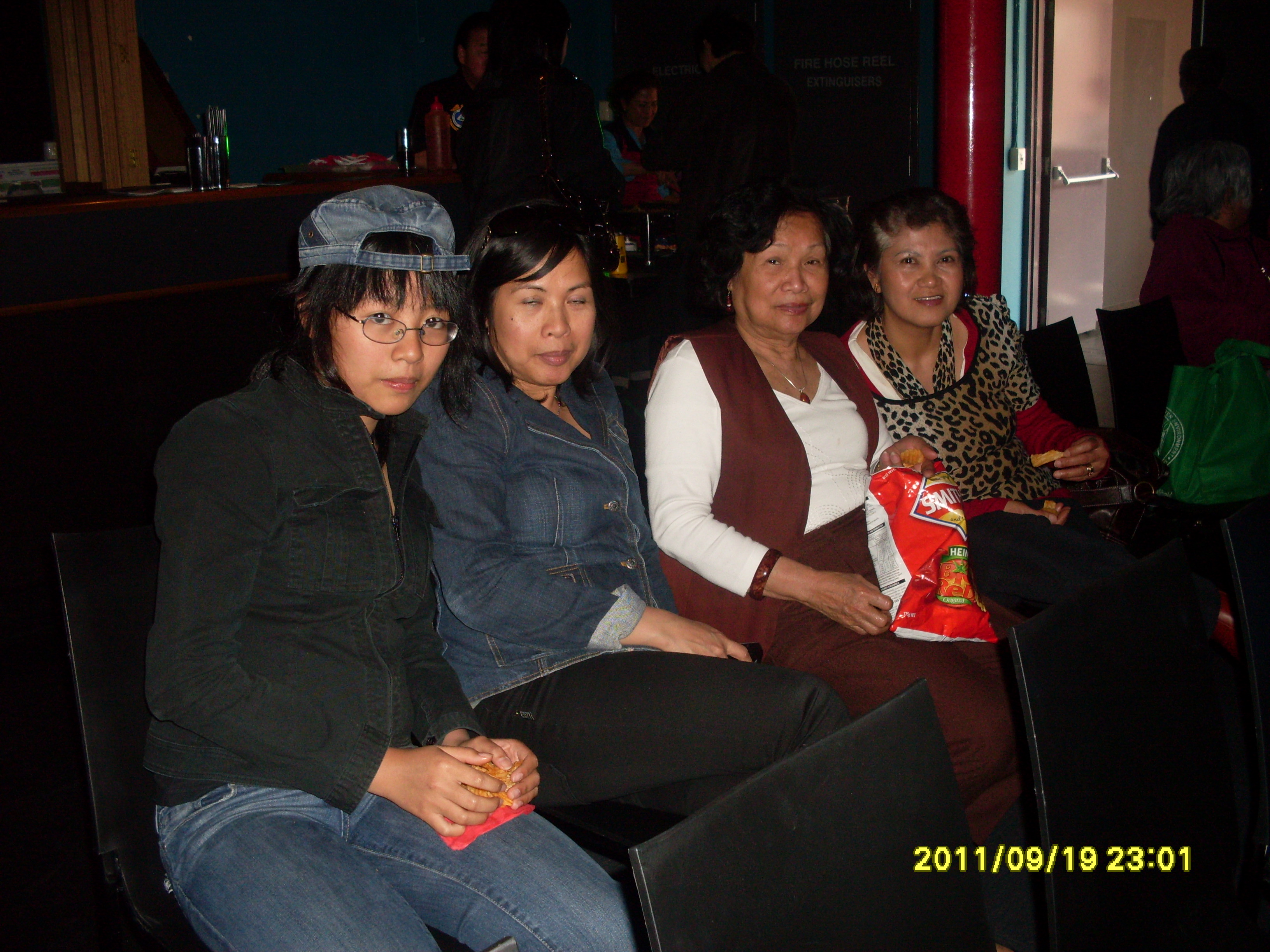
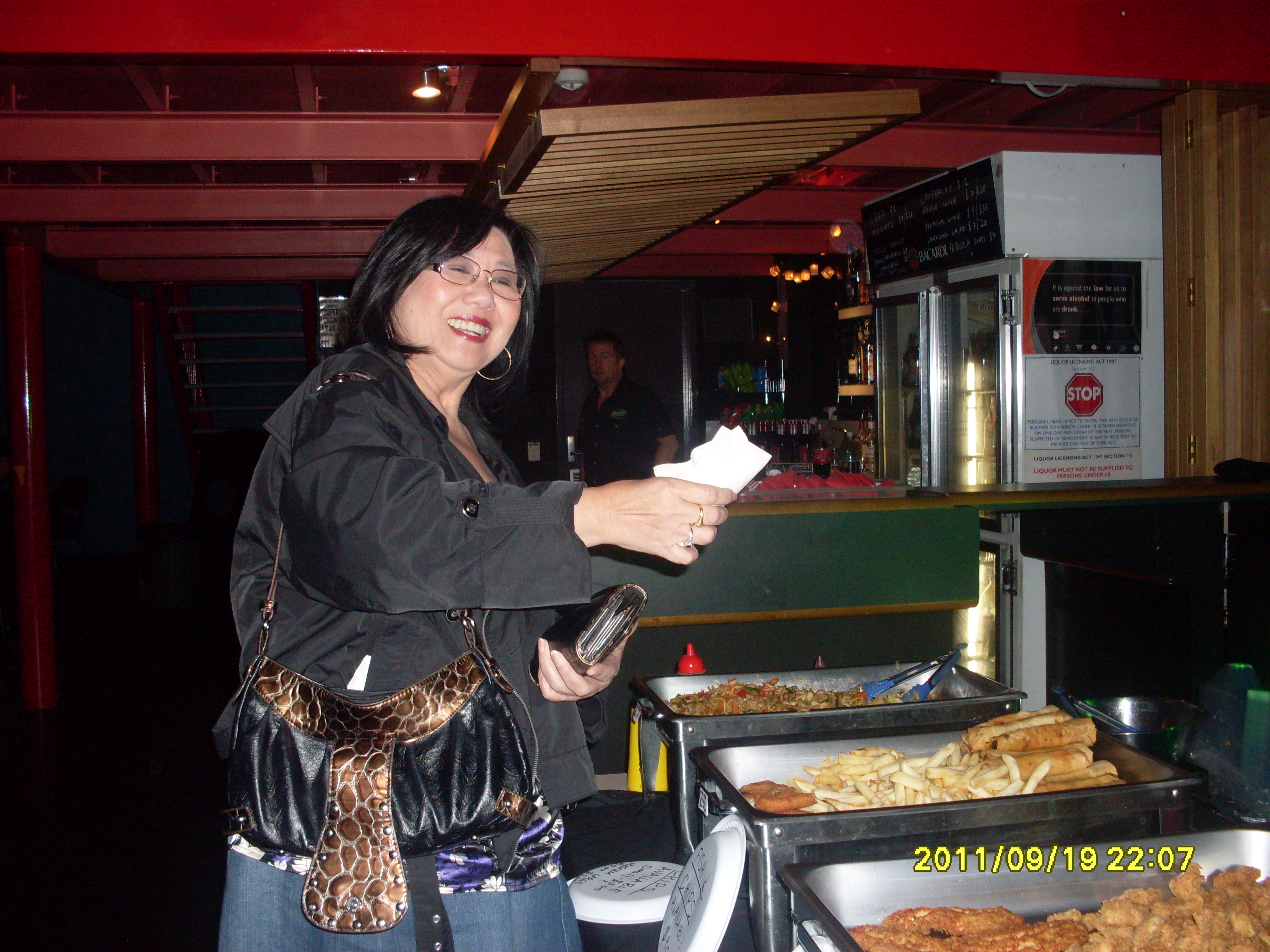
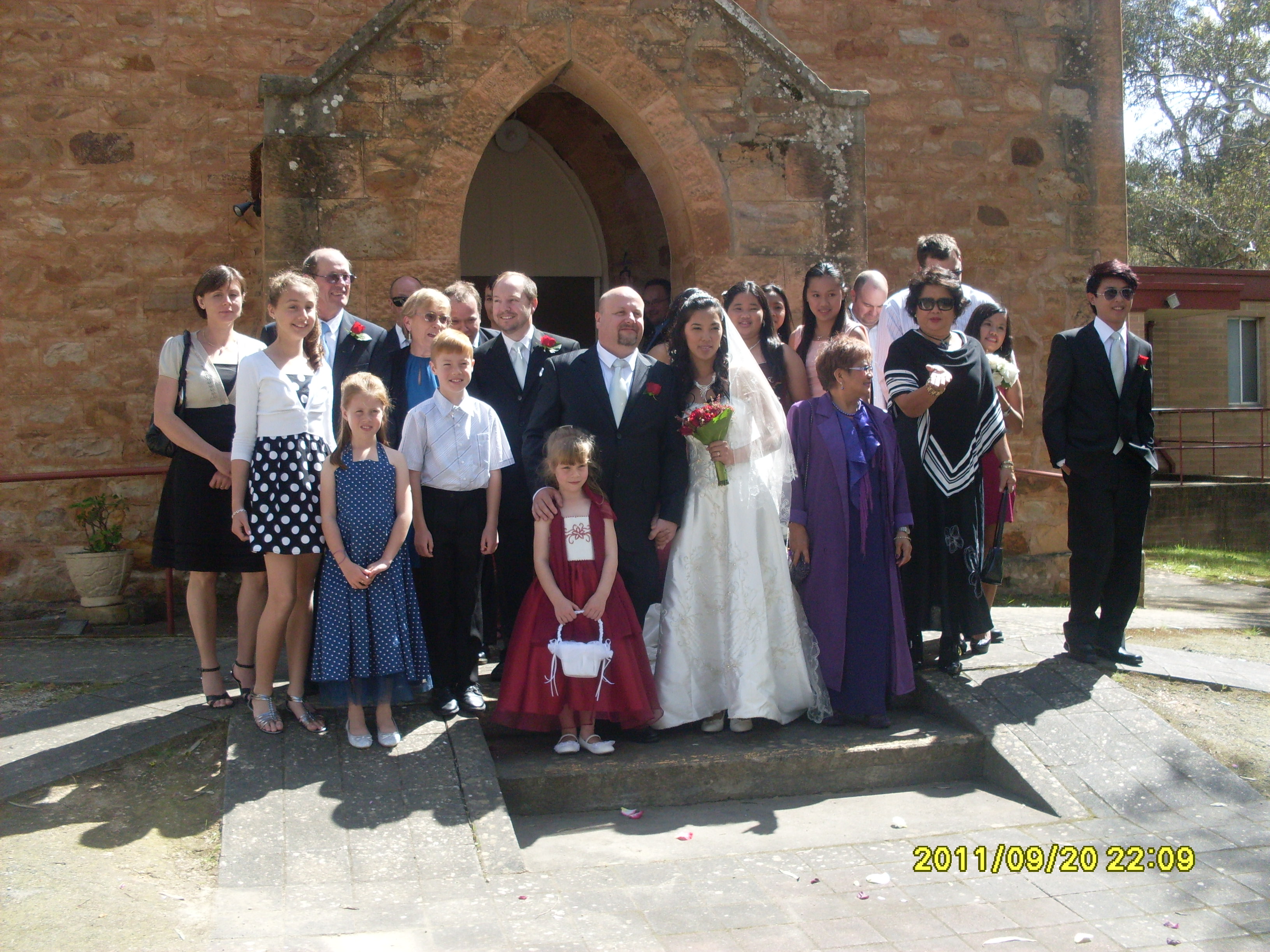
A new addition to the Filipino community here, among the abundance of skilled migration, is the recent arrival of Marilen Vergara and her two children Angelo and Joanne. She married David Cornish in a beautiful ceremony at the charming Uniting Church in Golden Grove in an intimate gathering with family and close friends. None other than Cholly Winter walked the bride down the aisle which was later followed by more celebrations, wining and dining at the Greenwith Community Centre. Congratulations to Marilen and David –woohoo!
Cultural exchange program
Posted 18 June 2011
Jose Rizal (1861-1896) is one of the national heroes of the Philippines, a patriot and independent spirit who fought for freedom during the Spanish colonial era. His trial and execution at age 35 they say made him a martyr of in the 1896 Philippine Revolution, which interestingly was the same year that the Australian electorate was reformed whereby for the first time voting for women was legalized in South Australia. Known for his two famous novels ‘Noli Me Tangere’ and ‘Íl Filibusterismo’ he is a great apostle of Filipino nationalism. In celebration of his 150th birthday on 19 June 2011, the City of Calamba, Laguna , the birthplace of Rizal, erected a 22ft bronze statue that was unveiled by His Excellency President Benigno Aquino III.
June 12 is the day we officially commemorate Philippine independence and to help celebrate, Filipino friends and families in Adelaide gathered at the Greek Orthodox Community Hall on this chilly eve for the annual dinner-dance hosted by the Filipino Settlement Coordinating Council of South Australia (FSCCSA) led by current president Vicky Davey. Attending with Cholly and Vic, Ben found the night to be a good opportunity to reconnect with family friends, make new ones and reflect a little on the historical significance of the occasion. Guests were treated to a hearty dinner and an ‘open bar’ to complement the festive atmosphere and disco dancing with eclectic music thanks to Jerry Mendoza.
It was another cold (and wet) morning on Saturday 18 June for session 3 of Creative Movement Workshops and we began on the floor lying in a relaxed supine position (shivasana) from which we drew attention to our toes, feet, ankles, fingers, hands and wrists by gently moving them in circular motions, so commencing the activity within the body. There was a sense of using our weight to attune to the feeling of the spine and limbs being supported by the floor as Jess Statton instructed us on isolating the head from side to side for a moment before using the momentum to twist the torso creating a spiral and rolling over onto the stomach. We continued rolling until we arrived back in the supine position and this was done both to the right and left, later combined with the arms and torso moving in curvilinear pathways through different planes.
Still working with the spine this time in a sagittal plane we did a series of stationary spinal rolls before doing the same while walking randomly through the space. To begin with we were given 8 counts to roll down while taking as many steps and 8 counts to roll up with the same number of steps. -This was modified until we got down to 2 counts which meant that we had to manage ourselves and our timing accordingly to complete the full range of movement within the shorter time frame.
The next exercise commenced with another spinal roll down and forward bend stretch to energize the hamstrings which then progressed into downward facing dog pose (adho mukha shvanasana), a modified hero pose with arms extended up (virasana), followed by a deep lunge with spiral then upward facing dog pose (urdhva mukha shvanasana), a spinal roll up, high release and finally a falling curve forward to standing.
A foot articulation exercise had us working in parallel position initially for tondus forward, side and to the back then in turn-out which was followed by a brisk running pattern that travelled forwards and backwards changing directions.
 These two exercises followed a swinging spinal sequence to further mobilize the torso working with the idea of leading with the spine, the arms following and moving in extensive arcs around the body. The use of the torso changing levels was predominant here as it passed through various positions ranging from a high release position and upper body curve forwards with arabesque, to the curving of the torso diagonally forwards over one leg, feet separated in a wide stance then alternating from side to side. In observing the mechanics of this, the level changes were a bit tricky and required us to be aware of our centre of gravity especially when descending to and ascending from the floor.
The final jump routine was a combination of gallops and step hops from side to side, a big gallop travelling on a diagonal, air turn and spiral sequence to the floor. Reversing from here into backward, sideward and forward dodging steps which got us back on the floor and up again in around 13 counts. After this we had to finish with the opening spinal roll and yoga stretch series and also the floor rolls performed from side to side.
Later Jess, Ben and Cholly got together after class to discuss some ideas and the requirements for a cultural exchange project in the Philippines possibly through the Asia Link Program of the University of Melbourne. The plan is that Jess will travel to Manila and Cebu with the intention of meeting and working with selected dance artists and companies in January 2012. Jess also shared during the meeting that she felt class was more of a technical workout with not much ‘creative’ content. Ben related that aside from contact improvisation and partner work which we didn’t get to, he feels that building technical skills is creative in itself. Not only can this type of body and spatial conditioning be the impetus that choreographers utilize to create exhilarating dance pieces and thought provoking repertory works, it can also develop our cognitive/corporeal functioning and aesthetic sensibilities. Studies have shown that dance develops strength, endurance, coordination and self-confidence. It promotes space and body awareness, correct alignment and creative expression which are also beneficial when it comes to our professional and personal lives during activities such as learning to work with others and in a team, communicating ideas and information, problem solving, planning and accomplishing organisational tasks.
‘Hip-waiste-shoulder-head’
Posted 6 June 2011
The first of what became a 2 part production meeting commenced on Wednesday, 25 May with Onepoint618 Dance Theatre and Education Company’s artistic director Katrina Lazaroff and company dancer/collaborator Jess Statton who got together at 9am at Tempo in the city’s newly developed and now up-market Hindley Street. They were later joined by Ben and we began to discuss the ways we could perhaps contribute to the Community Cultural Development (CCD) paradigm.
By 10:20am we rushed to Ausdance SA at their Adelaide studio in Station Arcade for Kat’s contemporary dance class. Ausdance is a national arts organisation that specializes in the diverse spheres of dance education, performances and networking, offering further training opportunities for professional dancers and independent artists. This particular class (intermediate/advanced) is ideal for experienced dancers looking to further their practice, technical abilities and performance skills.
Part 2 of the production meeting was on Friday, 27 May in the cold but picturesque Adelaide hills at Kat’s house where she lives with her partner (dancer, performer and arts educator) Richard Seidel and their daughter Zoe (who’s 2 years old). Deliciously heart-warming freshly brewed coffee, tea and nibbles were shared (thanks Kat) along with a bit more planning and structuring of up-coming projects, goals, programs and creative prospects. This was approached with the aim of further developing good artist and community rapport.
Session 2 of our Creative Movement Workshops was held on Saturday, 4 June at the Enfield Community Centre with Onepoint618 company dancer Emma Stokes who took us through the same centering exercises which started by visualizing a central point extending out from the crown of the head and downward through the skull down the spine to the soles of the feet. Walking and jogging through the space was accompanied by more centering, this time with the assistance of a partner whereby we took turns to do a slow spinal roll down and up while the other massaged the spine of the person doing the spinal roll to encourage more awareness of each vertebra moving sequentially during the curving and straightening of the spine. A quick ‘partner stretch’ followed before the swiping of the torso and limbs with the palms of the hands to release any tension and negative energy. 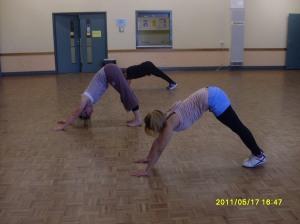 Still working in partners we did a contact improvisation exercise next, which started facing each other with our right arms partially extended in front and connected at the forearm. From here, alternating, one person applied force to initiate a few arm movements whilst maintaining that point of contact. This was developed slightly with the addition of the hands to grip our partner and maneuver them through a series of body movements in all directions to explore the range of motion that can be accomplished with the aid of an ‘initiator’.
Next we reviewed the torso stretch with ‘high release’ adding a breath element by consciously exhaling during the downward, forward and side curves juxtaposed by brisk inhalations for the upward transitional curves, flat back (with arms), high release, ‘snake’ movement, and finally the quick spinal roll up at the end. We then did the spiral exercise again placing more emphasis on using the spine to initiate the twisting of the torso first and the arms following. This reminded Ben of David Roche’s rigorous Graham based technique classes in college/uni where a similar ‘hip-waist-shoulder-head’ rule was applied.
After doing the same travelling sequence we learnt in session 1 which began with a box step and included skips, step hops and an assemble` jump, we worked again in partners on a floor sequence -articulating the spine while learning how to sense one another and how to utilize different body parts, namely the legs, buttocks and arms, to move (slide and swivel) across the floor. This combination changed directions and introduced the idea of applying ‘check points’ before moving on to the next step of the sequence.
To help maximize the potential of the next 4 sessions it was decided by Jess, Kat and Ben that more outreach would be good by way of letter box leaflets and the posting of notice board sheets/posters at various local public venues and business establishments. We have got the ball rolling thanks to the Port Adelaide and Enfield council and this will be undertaken continuously by Ben, Jess and other supporters/friends over the next few weeks.
Post-industrial backdrop
Posted 9 May 2011
While still adjusting to new terrain amid quite a prolific arts scene, ‘creative movement workshops’ in Adelaide commenced on Saturday, 7 May at the Enfield Community Centre with dance artist and teacher Emma Stokes from Adelaide based company Onepoint618 Dance. Emma will be facilitating the first three of seven sessions of the introductory program with fellow company dancer Jess Statton leading classes for the remaining sessions. Under the artistic direction of Katrina Lazaroff Onepoint618 is a South Australian dance theatre and education company, fostering creativity and artistic excellence in dance and working with the genres of contemporary dance, popular dance styles, music, theatre, design and technology to deliver innovative, accessible performances and educational programs for all ages that evoke the imagination and create collaborative original dance experiences.
On a fairly chilly Saturday morning (especially for those used to more tropical climes) the class itself began with a centering exercise wherein we used a gentle residual rocking motion to vertically align with our centre within the space. For stimulating mind-body awareness we then visualized a thread extending out from the top of our heads and descending down through the spine to the soles of our feet before walking and later jogging across the floor weaving in and out of one anothers’ pathways eventually establishing a connection with fellow class participants. More centre work followed with the terms ‘çurve’ and ‘high release’ acting as external motivators along with step by step instructions on how to do each movement correctly. The torso stretch exercise to which the terms were applied had a constructive style and flow about it somehow similar to the (precarious?) qualities that can be associated with the use of syntax.
Moving from the torso to the different zones below the waist and back again, ‘plie’ and ‘tondu’ exercises to energize the joints and articulate the feet preceded a swerving, spiral sequence with ‘high release’ to accentuate the importance of the spine and lower limbs in the overall carriage of the body, -with the support of the arms of course to help frame, balance and steer the various moving physiological organisations.
Once we were warm we got moving across the floor by way of light jogging steps, step hops, galloping, grapevine and box steps, skips and assembling jumps in an effort to deploy and immerse the whole physical body in the movement material. An invigorating cool down of yoga stretches concluded class giving everyone a chance to reflect on the new connections (or reconnections) the day’s class work began to channel.
Traversing in the blink of an eye from what was a promising classroom environment to Rehearsal Room 2 at the Adelaide Festival Centre, around 60 guests attended the third showing of ‘Involuntary’ a new dance theatre work by Katrina Lazaroff. Performed by Carlie Angel, Ninian Donald, Daniel Jaber and Jess Statton with sound design by Sascha Budimski, lighting/video design by Nic Mollison and set/costume design by Zoe Maar, the 45-50 minute work-in-progress “investigates modes of coercion and unconscious participation”. As a result of a 3 week full-time second stage creative development, director and choreographer Katrina Lazaroff shares that “The work aims to take a satirical look at ‘so-called’ social advancement, to parody our current obsession with technology and to reflect our ability to operate in societies driven by greed and hypocrisy”.
With reference to a variety of spatial issues, in particular the perception of ‘cyber space’, this multidisciplinary performance utilized voice-over modulations and cool Matrix (the movie) -style simulated computer graphics throughout the showing – juxtaposed by spoken-word dialogue as well as bits of accumulated and unwanted technology strategically positioned on stage – creating a post-industrial backdrop that further enhanced (and at times ‘camouflaged’) the movements of the four dancers. 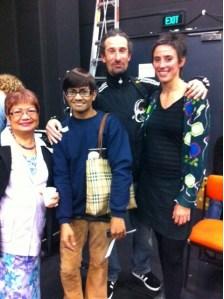 Working individually, with partners, in a trio and as a whole, the dancers excelled in assimilating rigid, functional actions teamed with sinuous, fluid patterns perhaps characteristic of Kat’s choreography and creative process. Meanwhile the stage itself appeared to come to life as the piece progressed with all the several moveable parts and units transforming it into what seemed like a singular moving entity or organism… That is, up until a somewhat abrupt ending which featured the dancers cocooned and motionless on the floor. Almost certainly mentally consumed yet unaffected by the complex structure and the intellectual concepts presented, Kat said she would want to put more perspective into the artistic direction of the piece before further shaping the performance viability of the work.
The final full-length work will be premiered in 2012 at the SPACE Theatre as part of the Adelaide Festival Centre’s inSPACE Program.
How can dance contribute to the transmission of community cultural traditions?
Posted 25 April 2011
“Culture comprises the whole complex of distinctive spiritual, material, intellectual and emotional features that characterize a society or cultural group. It includes not only the arts and letters but also modes of life, the fundamental rights of the human being, value systems, traditions and beliefs”
~UNESCO, 1982
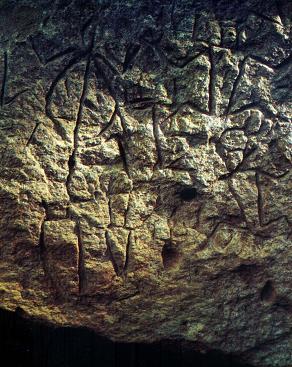
As culture repositories believed to have descended from the first Malay settlers in the highland regions of the Philippines, the transmission of early ancestral beliefs from one generation to the next amongst the Ifugao people has traditionally been assigned to the tribal elders and babaylan (shaman priests) who would pass on the community’s sacred teachings through family gatherings, ritual corroborees and by formal or informal tutelage. The Ifugao province is named after the ethnic group and the term is derived from Pugaw or ‘Earthworld’, which, in Ifugao mythology is the place that humans and earth spirits inhabit. With numerous population dispersals such as that which occurred during the 1970’s and the 1980’s predominantly by migrating families wanting to improve their livelihood, the preservation of essential cultural knowledge (including the indigenous knowledge) of ethnic communities are important considerations not only for posterity but also as relevant means of expression, communication and transformation.
In modern day urban settings where the purveyors of learning are (our) teachers, the use of methodical ways of looking at character formation and corporeal development can help impart valuable lessons about human life. Educational needs of urban folks are formally provided by institutions of higher learning while alternate learning modules fall into the hands of development workers, artists and cultural workers to encourage lifelong learning through informal, non-formal, and alternative cultural education (INFACE).
Since 1992 the National Committee on Cultural Education (NCCEd) based in the Philippines addresses cultural education needs in the informal, non-formal and alternative learning systems under the stewardship of the National Commission on Culture and the Arts (NCCA). This notion of a central hub with the artist as agent is aimed to facilitate the effective dissemination of cultural products across the country and overseas in the areas of arts education, HR development, the promotion of Filipino artists, cultural workers and creative works, as well as in the continuous training of co-workers and administrators through collaboration by qualified trainers.
To explore the parameters of the Philippine diaspora whilst fostering meaningful relationships that reflect the social bearing of the creative process within a community context, a holistic approach by way of arts based practicum work is at the heart of Anahata’s dance, film and design projects.
As a vital building block for shaping societies, dance enthusiasts and advocates can find solace in its many forms, from the stellar grace of acclaimed company dance artists to the thought provoking gestures of ancient ethnic dances preserved through time, not to mention the defiant strength of independent choreographers or perhaps the impact of technology on the body in motion (eg. dance movement therapy). The relatively new field of community dance is a growing area of interest that presents various questions characterized by the united passion of its practitioners to work with and care for people through dance.
With well grounded foundations in a vast vocabulary of dance techniques, creative movement workshops in Adelaide will draw from ongoing work in the Philippines to raise the stakes on wellness and for opening a platform for deeper thinking on dance in the context of society, development, gender, kinetics, semiotics, ecology and other themes of contemporary relevance.
Dr. Halbert Dunn, a leading figure in the field of healthcare elaborated on a philosophy that was multidimensional, professing that “without a knowledge of one’s inner self, understanding of the outer world cannot have breadth or depth.”
To engage the thematic challenges of (urban) wellness, the consolidation of a better subjective understanding offers a supplementary approach to the issue of development for bolstering ways of (self?) functioning in one’s environment. The wellness movement first gained momentum in the 1950’s when society was at odds in dealing with certain realities brought about by the pressures of life and the workplace. An emphasis on freedom from disease and disability was focused on discovering adequate levels of intervention for promoting well-being. Clinical researchers and healthcare practitioners in the West pushed the idea that a conscious process of improving the quality of life was possible by adopting various lifestyle choices which would result in increased levels of wellbeing. Returning to the wisdom of the body was seen as a methodical means of connecting with the whole person (body, mind and spirit) through the physical, emotional, social, intellectual, spiritual and occupational dimensions.
For strengthening links to relevant arts based networks, Adelaide based projects will strive to contribute to SA’s cultural diversity as a cosmopolitan destination and international focal point through creative opportunities and unique ‘arts experiences’. Backed by industry awareness in the application, transmission and consumption of arts education for inner/individual/inter-personal growth, these efforts should broaden the scope of our enquiry for inspiring insight on local health practices, global perspectives and creative expression with a distinct community development approach.
 Anahata Community